
Scripture Reading: Romans 12: 9-21
As we arrive at the last Sunday of the year 2025, many of us are focused on the New Year ahead of us, while others are still enjoying the festive atmosphere of Christmas. With each passing year, our themes for Christmas changes as we try to see things in a new light.
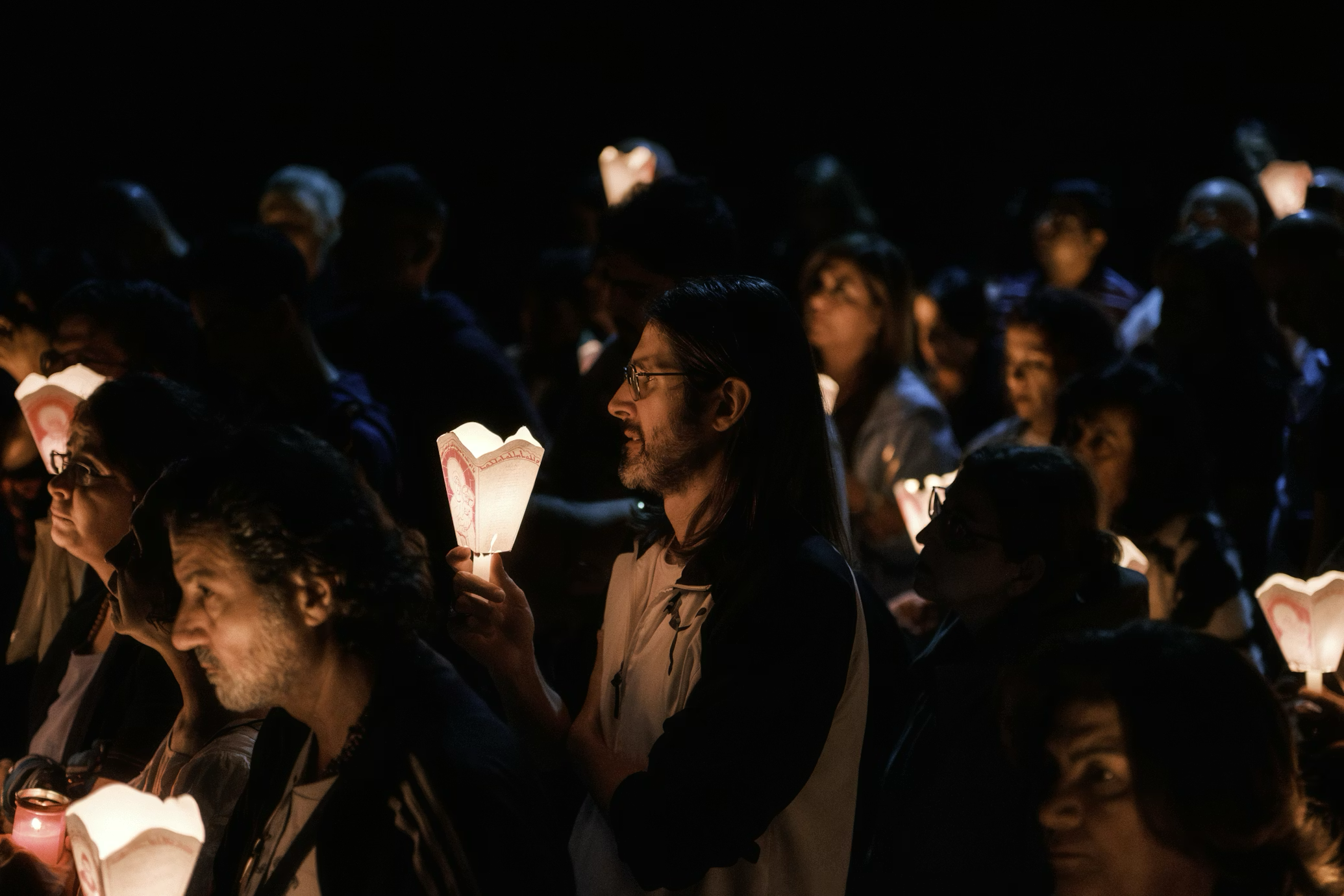
However, each year also progressively brings more news of the persecution of Christian communities in different parts of the world. When we witness such atrocities, our hearts become troubled and we find it challenging to forgive the transgressors.
In our sermon today, we will examine the early Church that had also undergone mass-scale persecution, reflect on the exhortations of Saint Paul to the Romans who also faced persecution, and learn how we can apply the same in our lives to support our community, serve the LORD, and keep the alight – the light of Christianity.
“May the words of my mouth, and the meditation of our hearts, be acceptable in your sight, O Lord, my strength, and my redeemer. Amen.”
If we look back to the theme of Christmas, we find the baby Jesus to be God’s gift of hope to the world. A world tainted and corrupted, finally had a chance to redeem itself from the bondage of sin. The Messiah was born as the people of God cried for hope.
However, we don’t immediately witness justice, love, or peace. Instead we witness the tyranny of King Herod as he butchered the newborns of his own people, lest he be replaced by the prophesied king of the Jews – Jesus. The ambition of Herod made him a slave to sin, a servant of Satan.
Mary and Joseph – through their obedience to God, leaving their comfort and livelihood to flee to Egypt, to save Jesus – saved the hope for salvation of humanity. The spiritual battle was not fought with swords, but rather through faith, and obedience to God. It was a battle against one’s own flesh and desires. With this story in mind, let us remind ourselves that…
The Christian story itself started under persecution.
We witness stories of persecution and oppression of the early Christians during the Roman Empire. Being labelled as an outlawed cult, the early Christians started to worship in secret, using the symbol of a fish to identify believers.
The fish was not only symbolic, but also represented their beliefs – as “fish” is called “ἰχθύς” in Greek, which was the dominant language in the Eastern Roman Empire. It stood as an acronym for,
Iesous = Jesus
Christos = Christ
Theos =God
(H)Ueos = Son
Soter = Saviour
The symbol of fish confessing: “Jesus Christ, Son of God, Saviour.”

Early Christianity was closer to how we categorize a secret society than an organized religion. Worshipping in a beautiful church, being able to openly express their faith, and holding justice to Christian norms was a far fetched dream. Christians grew in numbers, but were also being persecuted in increasing numbers.
At this time, we see a new ray of hope. An event that changes the course of Christianity in the Roman Empire.
In the year 312 AD, the night before his greatest battle – against Roman Emperor Maxentius, Constantine the Great, a commanding Roman general – saw the vision of Christ Jesus. He then instructs his army to paint the Chi Rho “☧” on their shields, two Greek letters used to spell “Christos”, meaning Christ. Constantine decisively wins what is known to be one of the greatest battles studied by tacticians and historians alike – the Battle of Milvian Bridge.
The following year, in 313 AD, through the Edict of Milan – the now Emperor Constantine, legalised Christianity, returned confiscated properties to Christians, funded the construction of churches, and himself, became a Christian.
Christianity, having survived three centuries of persecution, now became the religion of that very Roman Empire, under which it was persecuted. Christian persecution had finally stopped.
Later in time, the Byzantine Emperor – Justinian published on 7th April, 529 AD, “Corpus Juris Civilis”. It was the first organised body of civil law that did not conflict itself, serving as the framework for civil laws for most of the world till date.
Christian laws were an integral part of the Corpus Juris Civilis, as it spread to different parts of the world through governmental necessities, it extended the Christian norms of justice to the entire world, including our own country, India.
The almighty God has blessed us abundantly for the faith and works of people who were before us. We have the luxury to sit in churches, we have the luxury to skip church on a Sunday knowing that we can attend the following Sunday. Our faith has become so weak and untested, that we have started to rely on ourselves and not on God.
Like Jesus called out the Pharisees, we are at risk of becoming like “whitewashed tombs”, beautiful on the outside and rotten on the inside. We cry because of ten demolished churches, but we do not cry for the thousands who are spiritually dying everyday.
My fellow believers, let us always know in our hearts that our Christianity will outlast every empire of the world. Every knee shall bow and every tongue shall confess that Christ Jesus is LORD. His kingdom is forever.
But WE need to make sure that WE are of His kingdom.
As Jesus said, only he who does the will of God, is of the LORD Jesus – it is crucial for us to reflect upon the path God desires us to walk, for us to understand the will of God in our lives and for our community.
Today’s Scripture portion that was read – is found in St. Paul’s Letter to the Romans 12: 9-21. From the exhortation of Paul, we come to learn of the “Marks of a True Christian”. From this chapter, we learn of three practical points to help us stay united as the people of God amidst persecution.
Serving the Community (v. 10, 15-16)
In these verses, the apostle Paul has urged us to be devoted to one another in love and to honour others above ourselves. This indicates that we must be respectful and loving towards others.
We are urged to rejoice with those who rejoice, and mourn with those who mourn – this teaches us to be empathetic to the feelings of others. When we find ourselves having conflicting opinions or emotions, Paul emphasises that we must try to empathise with them and be a part of their emotion – both in their happiness and their sadness.
We are also urged to be willing to associate with people who may not be holding high positions. This emphasises that we must be humble and open to all irrespective of the positions they may hold.
Let us ask ourselves, when was the last time we spoke kindly even when we were angry or frustrated? When was the last time we stood by our friends and family during their moments of joy and sorrow? When did we dignify that person, who is otherwise neglected or ignored by society?
By mindfully serving the community, we not only come closer to solidarity with the community, but grow closer to God, fulfilling His will in our lives.
Serving the LORD (v. 11-13)
These verses urge us to serve the LORD with zeal and spirit. We are asked to always have faith in God, steadily and correctly responding to the various situations we face in life: joyful in hope; patient in suffering; and faithful in prayer. We are further asked to support the people of God, and to practice hospitality towards them.
Seemingly obvious, these three verses hold the source of faith that enables us to become an impactful practicing Christian. As we have heard even our pastor say this, Satan is not against good morals but he is against the presence of Jesus Christ. Without Christ, our morals will never hold steady.
Let us not feed the hungry with a grudging heart, but with a heart filled with love and compassion. If our hands do good deeds but our heart grumbles at goodness, then are we really moving closer to God?
Through serving the LORD and aligning our heart with His, through worship, prayer, and service to God – we maintain that light and peace in us, which not only helps us do the will of God but inspires others as they witness the blessing of God in action.
Remember, praising God amidst suffering speaks louder than when we are happy.
After losing one of his sons, one of our Bishop’s College professors (a pastor) posted on Facebook: “He gives and takes away, but my heart will choose to say – blessed be the name of the LORD.” Living faith indeed, which can only be obtained through service to God. The strength of God surpasses all sufferings of the world.
If we can devote ourselves in service to God, just as the early Christians had done- we too will stand as a beacon of hope for our persecuted and oppressed brothers and sisters who are desperately in need of hope and good news.
Fighting the Spiritual Warfare (v. 9, 14, 17-21)
In these verses, the apostle Paul instructs us how to practically take part in spiritual warfare. We are instructed to hate what is evil, but at the same time we are asked to bless even those who persecute us.
When we are wronged, it is natural for us to feel angry. From our perspective we are wronged, giving us a worldly justification to avenge the perceived injustice.
But we must remember that hate begets more hate. We cannot turn a negative number into positive by subtracting from it, similarly we cannot extinguish a fire started by an enemy by putting more fuel into it. The people who unjustly wrong others have been enslaved by sin, and we often make things worse by demonising them – pushing them further down the path of evil, further away from the fold of God.
As Paul urges us to not repay evil with evil, we are reminded of the saying of Jesus, that if we love only those who love us and do good only to those who are good to us, then we are no different from the tax collectors. We must be perfect and steadfast to all like our Father in Heaven, who makes it rain on both the righteous and the unrighteous.
We are promised justice, for it is said that “the LORD will avenge”, but we must not deliver the judgement ourselves – because not only is our judgement imperfect, but in doing so we become the bearers of that very evil we wanted to destroy.
As the chapter concludes, Paul urges us to overcome evil with goodness. By showing love and kindness to even our enemies, we show the strength of the God we serve and our faith in Him. We end the cycle of hate, and most importantly we remain obedient to God fulfilling His plans for our lives.
As we face persecution and humiliation, let us forgive our persecutors and pray for them. Let us fight against the hatred and oppression of evil with the love and patience of God.
In Conclusion
Through the practice of a true Christian life, we not only safeguard our own strength and stability that we find in God, but we also become a bearer of blessings for our community as well as for the people around us. While our Christian brothers and sisters mourn the loss of their freedom to practice and celebrate their faith, let us stand by them in support and solidarity.
Let us worship God fervently, and let us also join the fellowship of believers as fervently. We cannot serve God in isolation, so let us encourage one another during our difficult times, and let our love win against the evils of the world.
As we step into a New Year of our lives, let us once again boldly proclaim Jesus Christ, the Son of God, as our saviour – and let us turn back to the true way to salvation, the true Christianity – that has overcome every oppression and persecution for centuries past and eternity to come.
Let us pray,
Heavenly Father, we bow before you in pain and hope.
We are troubled to witness the suffering oppression of your people,
We feel helpless witnessing the oppressive structures of the world.
Holy Father, bless us with your strength and wisdom,
Bless us so that we may follow the path shown by your Son, Jesus Christ.
Bless us so that we may bring your comfort and peace to your creation.
We ask this in the name of our LORD and Saviour Jesus Christ. Amen.
Leave a Reply