

Author & Preacher: Brother Ennamalla Sahay Vivek Paul
Readings: Isaiah 5:11-24, 1 Corinthians 6:12-20, Ephesians 5:15-21
Gracious God, as we meditate upon Your Word, open our hearts and minds to receive it. May the words of my mouth and the meditation of our hearts be acceptable in Your sight, O Lord, our Rock and Redeemer. In Jesus’ name we pray, Amen.
A Real Incident
Mr. Raj Kamal, a young man, was from a village called Chinnabeeravalli, in the state of Telangana. I had known him since my childhood. In fifth standard, I saw him as disciplined and respectable. He was a good church musician. He seemed to have a bright future. After moving to the city for his studies, unhealthy friendships made his lifestyle worse.
From smoking, he went on to drinking and then to drugs. He quit studying, became unemployed, and spent all his money on drinks; he behaved violently towards his parents, and his marriage was broken. His parents had sold the farmland to fulfil his demands, but he wasted all his money and one fine morning, after consuming liquor, he was found dead.
It brings up a troubling question: how does freedom turn into bondage?
Freedom is the ability to make responsible decisions, while bondage is the deprivation of freedom when addiction dictates one’s body, decisions, relationships, responsibility and future. Firstly, Raj made his own decisions; then addiction took charge of his life.
Addiction is more than just an issue of self-control. Peer influence, emotional stress, family situation, social acceptance, availability, commercialization may influence one’s decision- making process. Thus, our Christian response shall not just focus on the factors contributing to the development of addiction, but on how the Church can give back to the person dignity, relationships and freedom.
1. When Intoxication Becomes an Issue of Justice (Isaiah 5:11-24)
Isaiah the prophet says that, “Woe to those who rise early in the morning that they may run after a strong drink.” Here, hôy is used as a prophetic expression denoting woe or judgment.
Isaiah is not just giving personal advice on drinking alcohol. He is exposing the disordered desires of society.
As Isaiah stated in 5:7, where the Lord seeks justice mišpāṭ but sees only violence and injustice, the woes are expressions of disorder on a larger scale. Isaiah 5:11-12 may have some relevance to the quest for justice.
In this case, šēkār refers to an intoxicant, while šākar means drunkenness. A society shaped by the pursuit of intoxication. However, verse 12 shows the underlying reason: “They do not regard the deeds of the LORD,” because the pursuit of pleasure has become more important than the worship of God. So, intoxication becomes an alternative centre of life even though Isaiah does not explicitly call wine an idol.
Isaiah describes intoxication in terms of power and injustice. Verses 22-23 state that people are “heroes in drinking wine” while they “acquit the guilty for a bribe and deprive the innocent of their rights.”
Therefore, substance abuse is not only a failure of an individual but can take place in an unjust social order.
In the current globalized world, production, market, advertisement, entertainment, digital media and consumerism are more interconnected than ever before. Substances, including alcohol, can be advertised in relation to freedom, success, celebration, sport, music, friendship and even escape. Through surrogate advertising, alcohol brands can keep presence in the market by using different products and events and avoiding any limitations. This, however, does not lead to addiction directly.

Corporations must not exploit the vulnerable for profit alone. Restrictions on advertising, regulations, age requirements, prevention measures, and treatment programs should therefore be strictly enforced by governments and their regulatory agencies. When commercial interests are prioritised over the suffering experienced by individuals, families, and communities as a result of addiction, a serious ethical conflict arises between the pursuit of economic interests and the protection of human welfare. However, globalisation, companies, or governments do not cause addiction. The issue here is whether the economic system sufficiently safeguards human welfare.
Through Isaiah, we are forced to ask ourselves: Who profits? Who loses? Who pays the price? Where is the justice? The Church needs to confront exploitation without defaming the dependent. The Church needs to work toward regulation, ethical commerce, prevention, protection of families, and treatment programs. Praying is important, but it needs to come along with doctors, counsellors, psychologists, and all kinds of rehabilitation.
While Isaiah opens up the economic and social aspects of intoxication, Paul examines the issue of how addiction takes place when the drug itself takes control over the individual.
2. When Freedom Becomes Bondage (1 Corinthians 6:12-20)
According to Paul, “All things are lawful for me, but not all things are beneficial,” and “I will not be dominated by anything.” “Exousiasthēsomai” in Greek implies becoming mastered or being subjected to an authority. Thus, Paul goes further than asking, “Is it permitted?” Instead, he asks, “Has it become my master?”
This provides a helpful approach to the problem of substance dependence. A person may progress from “I choose to use it,” to “I need it,” to “I cannot stop.” Choice leads to domination and from freedom to bondage.
However, Paul does not provide a medical explanation of this addiction. The problem was in Christian liberty, the body, sexual immorality, and the fellowship with Christ at that time. It would be incorrect to say that Paul explained the occurrence of today’s addiction. Nevertheless, his theological principle is valid: Christian freedom is not about limitless choice but freedom directed to benefit ourselves and to Christ.
“Your body is a temple of the Holy Spirit.”
St. Paul
The body is dignified. A person suffering from substance dependence is not dirty, worthless, or ungraceful. One should not identify oneself with one’s addiction.
Alcohol addiction affects both women and men but its consequences extend beyond the individual.
The central issue is that addiction becomes an issue of justice when it harms families and neighbours. It leads to
- financial problems
- neglect
- domestic violence
- fear and broken relationships
- and violating the dignity & well-being of others.
Therefore, Christian freedom must be understood in relation to the needs, dignity, and well-being of other people not only oneself.
This fact poses a difficulty for the Church. If there is substance abuse among individuals or families who are members of the church community, then the church must recognize this as a problem and assist the individuals concerned in getting professional help and treatment. Pastoral counselling might be a means to this end.
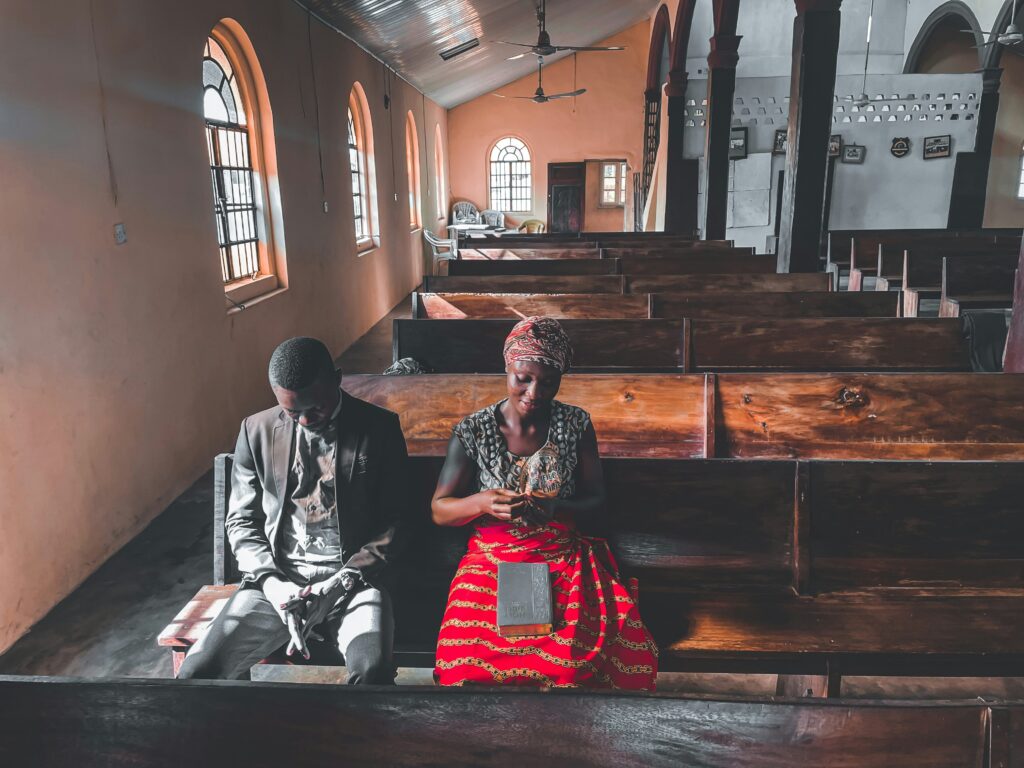
The Church may listen without shame, recommend professional intervention, offer support for treatment, be there for families, provide proper accountability, and accompany people throughout recovery. Professional help does not mean that it is disbelief. God works through medicine, counselling, rehabilitation centres, loved ones, and friends.
It is noteworthy that Paul says, “You are not your own; you were bought with a price.” (1 Cor. 6:19-20). Even if Paul is speaking in relation to sexual immorality, his point that you belong to Christ shows the value of the person. Therefore, pastoral care should not shame or condemn those affected by substance abuse but should accompany them towards healing and recovery. A Christian’s freedom is not only freedom from control but freedom for a new life. From what has mastery over us, Ephesians turns our attention to what should fill us.
3. From Intoxication to Spirit-filled Life (Ephesians 5:15-21)
It is more than a command to stay away from drinking alcohol. There is a contrast between drunkenness and living in the Holy Spirit. “Methyskesthe” in Greek means “become drunk” or “become intoxicated,” while “plērousthe” means “be filled.” Both are present imperatives, indicating that these are lifestyles of people. The context requires believers to walk as children of light, live wisely, seek to understand God’s will, and be filled with the Spirit. “Asōtia” means dissipation, recklessness, or even destruction. So, there is a contrast between destruction through intoxication and singing, thanksgiving, worship, and mutual subjection. This raises a pastoral challenge for the church, to understand: what sort of community is going to restore freedom?
- Firstly, the church needs pastoral listening. Persons having problems with alcohol require a place where they can recognize themselves as addicts without feeling shame.
- Secondly, the Church needs professional referral and treatment. Pastors are not supposed to pose as experts on addictions. Psychiatrists, physicians, counsellors, psychologists, rehabilitation centres, and these kinds of recovery processes will help to properly address the problem.
- Thirdly, the Church should offer family counselling, since addiction may affect spouses, parents, children, money and relationships, and counselling is key here.
- Fourthly, the Church must be in solidarity with accountability. Here, solidarity is not an indulgence of any form of harmful behaviour; it simply means one does not abandon someone else through encouragement of responsibility and change.
- Finally, the Church should have prevention programs, especially for the youth, as the latter can be easily influenced by peer pressure, social media, celebrities, and entertainers through commercial culture advocating for substance use. Hence, the Church needs to ensure that there are good relationship-building, resilience-building, media awareness, dialogues, and safe spaces for the youth.
Addiction affects both men and women. Alcohol and other intoxicating substances might have been associated with parties, masculinity, femininity, achievement, sports, music, friendship, and a feeling of belonging. Consequently, the point here is not about condemning everyone who drinks alcohol but intoxication, addiction, domination, lack of control, and damage.
Thus, Spirit-filled is not only “Do not drink”. It is an entirely new life: wisdom, not recklessness, communion, not isolation, thanksgiving, not destructive escape, mutual care, not domination, and Christ-centred belonging, not substance dependence.
Conclusion
Dear friends, these three texts give us a profound theology of substance abuse. Isaiah will not let us look at it as individual weakness since he unveils the connection between substance abuse, injustice, oppression, and profit. Paul turns the discussion not only from permission but from domination, and, at the same time, affirms the dignity of the body and belonging of the person to Christ. Ephesians then calls for something beyond the prohibition: the Spirit-filled life, community, worship, wisdom, and care. Most importantly, Scripture must be placed alongside medical and psychological expertise.
The Church has to incorporate all these aspects of prophetic justice, personal responsibility, professional treatment, family care, prevention, and pastoral compassion. It has to denounce oppressive systems and the globalised consumerist economy. Finally, the Gospel does not only concern itself with self-discipline but rather freedom that is achieved through Christ. The Church has the responsibility to take people from captivity to healing, from loneliness to community, from enslaving addiction to a Spirit-filled life of respectability, accountability, hope, and love.
Leave a Reply